Why exercise should evolve as we evolve
Movement Across a Woman's Lifespan: Why Exercise Should Evolve With Our Bodies
From POTS to breast cancer recovery to menopause, the right exercise isn't always more exercise. It's the exercise that fits the body you're in right now.
Movement is not one-size-fits-all
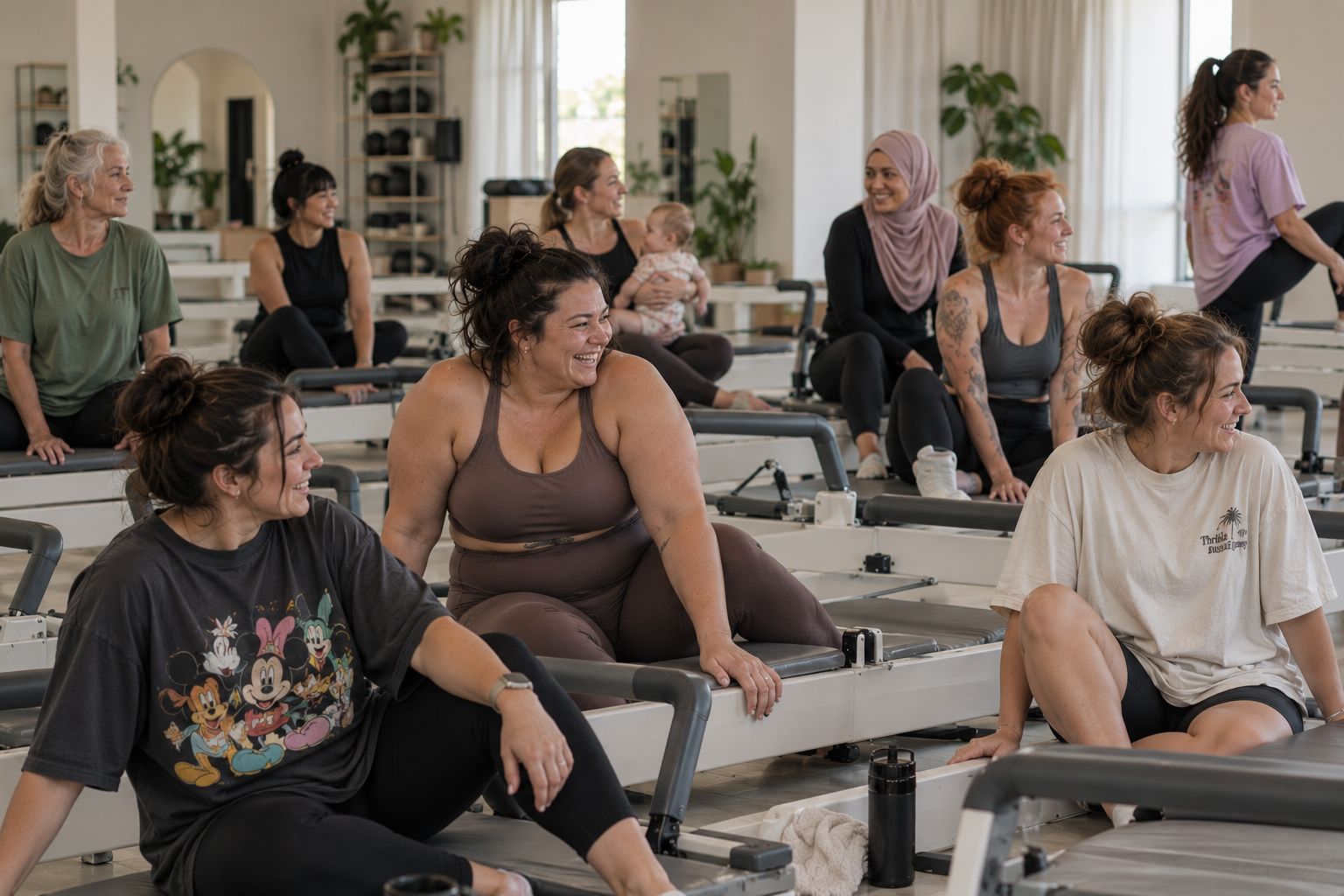
Ask a room of women how their relationship with exercise has changed over the years and you'll hear very different stories. The training that felt easy at 25 might feel punishing at 48. A body that once recovered overnight might now need three days. A diagnosis can rewrite the rules entirely.
None of that is a failure of willpower. It's physiology. Shifting levels of oestrogen and progesterone influence muscle, bone, blood vessels, sleep and temperature regulation. Cardiovascular responses to exercise change with pregnancy, with treatment and with age. Muscle strength and bone density follow their own arcs across a lifetime, and chronic health conditions can change how the nervous system, heart and immune system respond to effort.
This is where a lot of exercise advice falls short. Adapting exercise doesn't necessarily mean reducing it. Sometimes it means building more strength. Sometimes it means changing intensity, changing position or protecting recovery. October is a good moment to explore this, with Dysautonomia Awareness Month, Breast Cancer Awareness Month and World Menopause Day (18 October) all falling together.
How priorities can shift through life
Every woman's path is different, and not everyone will move through every stage below. But some broad patterns are worth knowing.
-
Adolescence and early adulthood
Most bone mass is built by our late twenties, and impact and strength training help build it.8 This is also a window for building a positive, lasting relationship with movement.
-
Reproductive years
Energy, symptoms and recovery can vary across the menstrual cycle for some women, and conditions such as endometriosis, PCOS or POTS often first appear in these years.
-
Pregnancy and postpartum
Australian guidelines encourage regular moderate activity, muscle strengthening and pelvic floor training through uncomplicated pregnancy, with a gradual, individual return after birth.9
-
Perimenopause and menopause
Falling oestrogen affects muscle, bone, joints, sleep and cardiovascular health, which makes strength and recovery central priorities.
-
Healthy ageing
Strength, balance and power become the foundations of independence, confidence and falls prevention.
Your reasons for moving can change too
It isn't only our bodies that change. Our reasons for moving often change as well. In your twenties, exercise might have been about a sport you loved, how you looked, or something you avoided altogether. For some women, early experiences of exercise were shaped by diet culture, school PE or feeling like they didn't belong, and that relationship took years to soften. Others never really had a relationship with movement at all.
Later in life, the why often shifts. It might be keeping up with your kids or grandkids, managing pain, protecting your bones, feeling strong again after a diagnosis, or simply having an hour that's just for you. Many of the women we work with started exercising for the first time in their forties, fifties, sixties and beyond. There's no single right reason to move, and no deadline for starting.
Dysautonomia Awareness Month
Dysautonomia: when the nervous system changes the rules of exercise
Your autonomic nervous system works in the background, adjusting heart rate, blood vessel tone and blood pressure every time you stand, climb stairs or start a workout. In dysautonomia, that regulation doesn't work as it should.
Postural orthostatic tachycardia syndrome (POTS) is one of the most common forms, and it predominantly affects women. It's defined by a sustained rise in heart rate of at least 30 beats per minute within ten minutes of standing (40 in adolescents), along with symptoms of orthostatic intolerance such as dizziness, palpitations, brain fog and fatigue.1
Why upright exercise is so hard
When we stand, gravity pulls blood towards the legs and abdomen. Most bodies compensate within seconds. In POTS, less blood returns to the heart, so it beats faster to keep up. Add the extra demands of upright exercise and the heart rate can climb well before the muscles are working hard.
That's why well-known POTS exercise protocols start in recumbent or seated positions, such as rowing, recumbent cycling and swimming, and only gradually progress to upright work as tolerance builds.2 Reformer Pilates, performed lying down, can be a useful option for the same reason.
It's not just deconditioning
Reduced fitness can contribute to POTS, and rebuilding it can help. But exercise intolerance isn't simply a sign that someone is unfit. Low blood volume, altered blood vessel control and nervous system dysfunction all play a part, and the drivers differ from person to person.1 Telling someone to push through is unhelpful at best. Symptoms and physiological responses, not a fixed plan, need to guide the programme.
Breast Cancer Awareness Month
Breast cancer: exercise as part of treatment and recovery
The Clinical Oncology Society of Australia recommends exercise as a standard part of cancer care, prescribed and delivered by appropriately qualified professionals such as Accredited Exercise Physiologists.4 That's not a claim that exercise treats cancer. It's recognition that the right exercise can make treatment and recovery more manageable.
International guidelines report strong evidence that well-designed exercise can reduce cancer-related fatigue, improve physical function and quality of life, and ease anxiety and depressive symptoms, both during and after treatment.5 Cancer-related fatigue is particularly worth understanding: it isn't ordinary tiredness and doesn't reliably improve with rest, yet appropriately dosed movement is one of the best-supported ways to manage it.
Heart, muscle and bone
Some breast cancer treatments, including certain chemotherapies and targeted therapies, can affect the heart and lower aerobic fitness. Treatment can also reduce muscle mass and strength. Hormone-blocking therapies and treatment-induced menopause can accelerate bone loss, which makes resistance and impact training especially relevant for many women.
Rethinking strength training and lymphoedema
Women who have had lymph nodes removed were once told to avoid lifting with the affected arm. The evidence has changed. In a landmark randomised trial, slowly progressive, supervised weight training did not worsen breast cancer-related lymphoedema and was linked to fewer flare-ups.6 Current guidelines conclude that resistance training is safe for women with, or at risk of, lymphoedema when introduced and progressed appropriately.5
World Menopause Day, 18 October
Perimenopause and menopause: strength, recovery and changing physiology
Oestrogen does far more than regulate the menstrual cycle. It helps maintain muscle quality, bone strength, joint and connective tissue health, blood vessel function and sleep. As levels fluctuate and then fall, many women notice changes in how exercise feels and how quickly they recover.
Bone loss accelerates in the years around the final period, and muscle strength declines faster without a stimulus to maintain it. Cardiovascular risk rises after menopause. Hot flushes and night sweats can disrupt sleep, which directly affects recovery. Pelvic floor and pelvic health changes can influence how comfortable impact or heavy lifting feels.
Chronic pain at midlife
This year's World Menopause Day focuses on chronic pain at midlife, and for good reason. Joint pain and musculoskeletal aches are among the most commonly reported symptoms of the menopause transition, yet they're often overlooked. Pain changes how people move, and avoiding movement can quietly erode strength and confidence. Carefully graded exercise can help reverse that cycle.
Beyond "just lift heavy"
Social media often reduces menopause advice to one instruction: lift heavy. There's real science underneath it. Progressive resistance training is one of the most effective ways to maintain muscle and bone. In the Australian LIFTMOR trial, supervised high-intensity resistance and impact training improved bone density and function in postmenopausal women with low bone mass.7
But "heavy" is relative, and the details matter. A woman with osteoporosis, pelvic organ prolapse, joint pain or poor sleep may need a different starting point, exercise selection or progression than someone training for a powerlifting meet. Australian guidance on exercise for bone health highlights progressive, individually tailored loading for exactly this reason.8 The goal is progressive challenge your body can adapt to, not a number on a bar.
The common thread: individualised movement
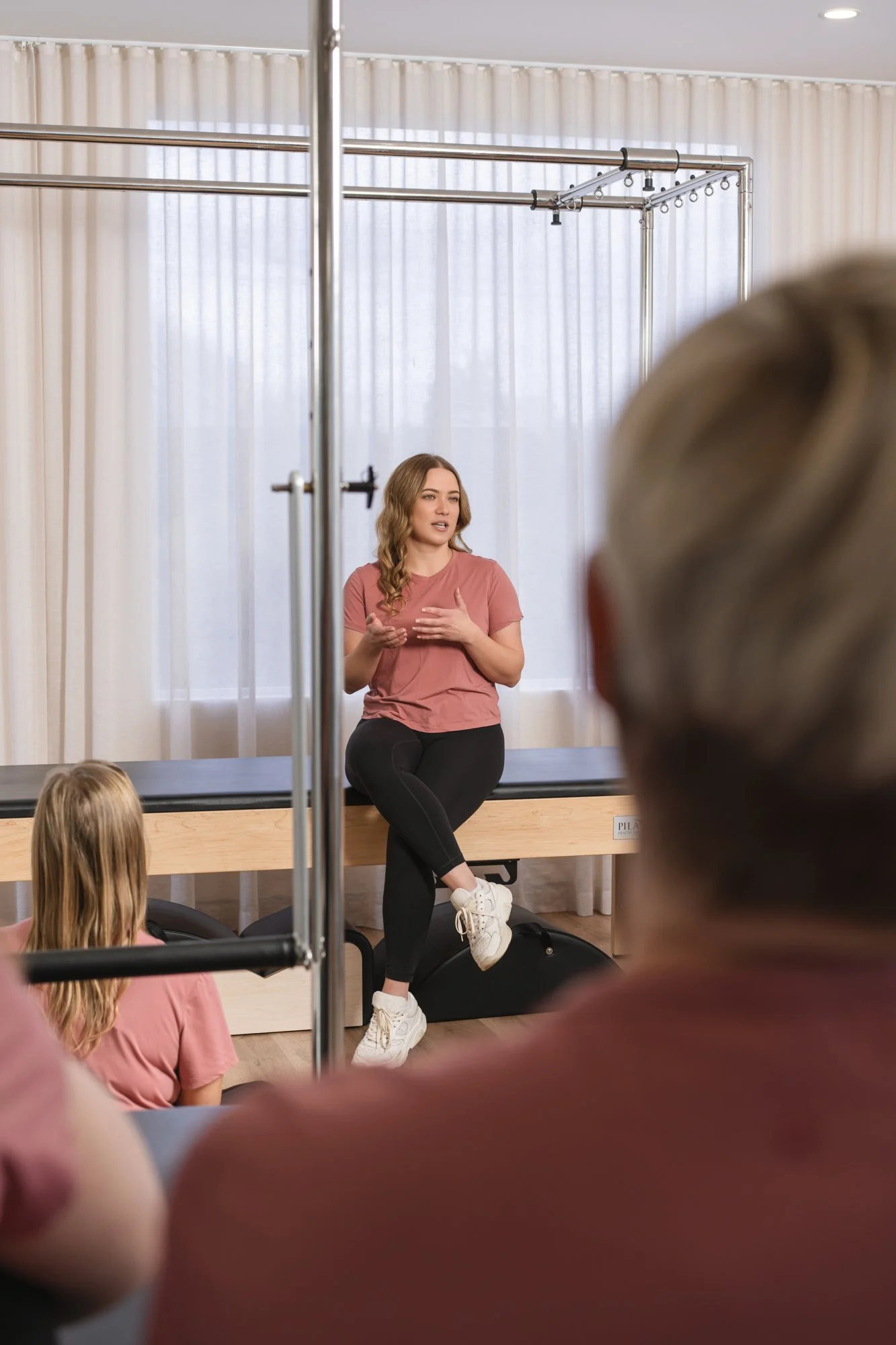
POTS, breast cancer and menopause look very different on paper. Yet they share a lesson. Exercise prescription works best when it reflects a person's physiology, symptoms, capacity, preferences and goals, and when it changes as those things change.
For one woman, that might mean starting horizontally and building upright tolerance over months. For another, it's a carefully progressed strength programme that rebuilds confidence in her arm after surgery. For another, it's heavier lifting than she ever thought she'd do, planned around sleep and pelvic health.
How any.BODY supports women's health
Accredited Exercise Physiologists are university-trained allied health professionals who specialise in prescribing exercise for complex and chronic health conditions. At any.BODY, our EPs work alongside clinical Pilates and strength programmes to support women with dysautonomia, cancer, menopause, pregnancy and much more.
We start with an assessment, listen to your history and goals, and build a plan around how your body is responding, not a generic template. As your health and life change, your programme changes with it.
If you'd like support finding a way of moving that works for your body, we'd love to help. You can book an Exercise Physiology assessment, or start with a free 15-minute discovery call to talk it through.
Book an assessment or discovery callMove With You
Your body changes. Your movement can change with it.
To celebrate movement through every stage of life, we're offering two limited-time promotions across selected class packs, Exercise Physiology appointments and memberships.
15% off eligible class packs and EP appointment packs
Save 15% on selected 10 and 20 class packs, plus 45-minute Exercise Physiology 10 packs. The discount applies only to the eligible packs listed below, not to every any.BODY product.
Group Reformer
- Reformer 10 Pack
- Reformer 20 Pack
Mums & Bubs
- Mums & Bubs 10 Pack
- Mums & Bubs 20 Pack
Clinical
- Clinical 10 Pack
- Clinical 20 Pack
Exercise Physiology: 45-minute appointments
- Level 1, 10 Pack, 45 minutes (Analiese and Mia)
- Level 2, 10 Pack, 45 minutes (Maya)
- Level 3, 10 Pack, 45 minutes (Hannah)
- Level 4, 10 Pack, 45 minutes (Holly)
Exercise Physiology: 45-minute semi-private
- Level 1, 10 Pack, 45 minutes, Semi-Private
- Level 2, 10 Pack, 45 minutes, Semi-Private
- Level 3, 10 Pack, 45 minutes, Semi-Private
- Level 4, 10 Pack, 45 minutes, Semi-Private
Standard pack expiry conditions apply, including the existing six-month expiry where applicable.
Explore Packs & Save 15%20% off your first membership payment
Save 20% on your first membership payment only. All later payments are charged at the standard membership rate.
The offer applies to all any.BODY memberships, including:
- All Access memberships
- Unlimited memberships
- All other currently available membership options
Your membership benefits and inclusions stay exactly the same.
- Minimum commitment of three months.
- Two weeks' notice is required to cancel after the minimum commitment.
- Standard membership terms, booking conditions and cancellation policies continue to apply.
Promotion terms and conditions
- Available for a limited time. Campaign dates: REPLACE-WITH-CAMPAIGN-DATES.
- Discounts apply only to the specified eligible products.
- The class pack code is MOVEWITHYOU (15% off eligible packs).
- The membership code is MOVEWITHYOU2 (20% off the first membership payment).
- The membership discount applies to the first payment only. Later payments are charged at the standard rate.
- Standard pack expiry conditions apply, including the existing six-month expiry where applicable.
- Existing membership terms and minimum commitments apply.
- Standard booking and cancellation policies remain in effect.
- Discounts cannot be combined with other promotions.
References
Labels show the type of evidence: guidelines and consensus statements reflect established practice; single trials and observational findings are more specific or still emerging.
- Vernino S, et al. Postural orthostatic tachycardia syndrome (POTS): state of the science and clinical care from a 2019 National Institutes of Health Expert Consensus Meeting, Part 1. Autonomic Neuroscience. 2021;235:102828. Read the POTS expert consensus Consensus
- Fu Q, Levine BD. Exercise and non-pharmacological treatment of POTS. Autonomic Neuroscience. 2018;215:20–27. Read the POTS exercise review Emerging
- National Institute for Health and Care Excellence (NICE). Myalgic encephalomyelitis (or encephalopathy)/chronic fatigue syndrome: diagnosis and management (NG206). 2021. Read the NICE ME/CFS guideline Guideline
- Cormie P, et al. Clinical Oncology Society of Australia position statement on exercise in cancer care.